
Heat Pump vs. Gas Furnace in Utah: An Honest Cost and Comfort Comparison for 2026
May 29, 2026 · Eco Home Heating & Cooling
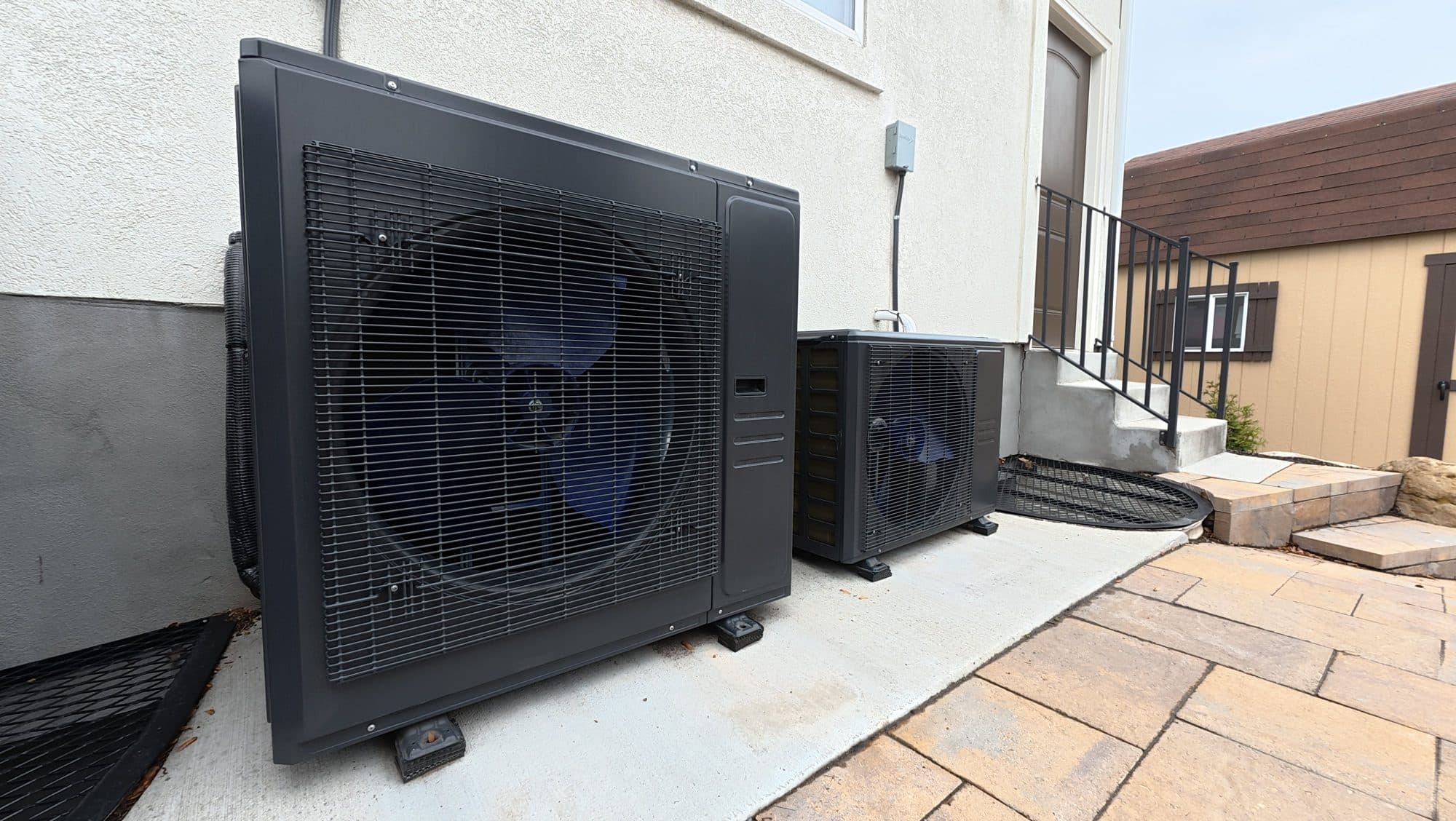
If you are weighing a Utah heat pump vs gas furnace for your next heating system, the answer comes down to install cost, sub-zero performance, and total operating cost over the life of the system on the Wasatch Front.
The case for a Utah heat pump has changed a lot over the last few years. What used to be a curiosity is now a serious contender against the gas furnace that has been the default for generations of Utah homes. The honest question heading into winter 2026 is no longer whether a heat pump works in our climate (it does), but how to get the most out of one in your specific home, budget, and energy bills.
Utah Heat Pump vs Gas Furnace: How They Stack Up
Heat pumps used to be the kind of thing your friend in Portland talked about. Today they're a real option for almost every Wasatch Front home. But "heat pump or furnace" is a bit of a false choice here. For most Utah homes, the system that makes the most sense is both: an inverter heat pump paired with a gas furnace, known as a dual-fuel system. Below we lay out the honest trade-offs so you can see why.
The Quick Definitions, Without the Marketing
A gas furnace burns natural gas (or sometimes propane) to produce heat, then a blower pushes that heat through your ducts. Modern condensing gas furnaces achieve 95% to 98% efficiency, meaning almost all of the gas you pay for ends up as usable heat in your house.
A heat pump moves heat instead of generating it. In winter, it pulls warmth from outdoor air (yes, even cold outdoor air) and delivers it inside. In summer, it runs in reverse and acts as an air conditioner. Inverter heat pumps adjust their speed to match what your home needs instead of just switching on and off. The U.S. Department of Energy guide to heat pump systems is a good, neutral primer on how they work.
Up-Front Cost in Utah
Here's how the main options compare. Exact pricing always depends on your home, your ductwork, and the equipment you choose.
- Gas furnace replacement: our furnace replacements start at $3,990, usually installed in one day, with an 80% or 96%+ furnace depending on the home.
- New AC paired with a high-efficiency gas furnace: roughly $9,000 to $14,000 on the general market.
- Dual-fuel system (inverter heat pump plus gas furnace): our complete dual-fuel systems start at $9,990 after incentives.
The fair comparison is a dual-fuel system versus a furnace plus a new AC, because a heat pump is also your air conditioner. Once the utility rebates are applied (more on those below), a dual-fuel system often lands in the same range as a conventional furnace and AC install, with much better efficiency.
Operating Cost: The Number That Actually Matters
This is where a lot of generic online advice gets Utah wrong. The relevant comparison is the cost of each unit of useful heat, which depends on local gas rates, local electric rates, and the temperature outside.
At Utah's Enbridge Gas residential gas rates and Rocky Mountain Power residential electric rates, a high-efficiency gas furnace is usually the cheaper way to heat on the coldest weeks of the year. As temperatures drop, a heat pump has to work harder for every bit of heat it delivers, while a furnace's efficiency stays the same.
That surprises people, so let's be clear about what it means. It does not mean heat pumps are a bad choice. It means the operating math in Utah is not a slam dunk for heat pumps alone the way it is in places with cheap electricity and expensive gas. Utah has relatively affordable gas, which is exactly why keeping the furnace in the system makes sense.
Where the heat pump earns its keep is the rest of the year. On mild heating days, it can heat your home very efficiently, and in summer it's a more efficient air conditioner than most older AC units.
Comfort Differences You Will Actually Notice
Beyond the dollars, there are real comfort differences worth considering.
- Air temperature out of the vents. A gas furnace blows air at 110 to 130 degrees Fahrenheit. A heat pump blows air at 90 to 105 degrees. Heat pump air is warm, but it doesn't feel hot. Some people love the gentler, more constant warmth. Others miss the blast of hot air from the furnace. With dual fuel, you get both.
- Run time. Inverter heat pumps run longer cycles at lower output, which produces more even temperatures throughout the house. Gas furnaces tend to cycle harder and faster, with bigger temperature swings room to room.
- Humidity. A heat pump in cooling mode dehumidifies more gently and continuously than a typical AC, which is more comfortable during Utah's monsoon weeks in late summer.
- Dryness in winter. Both systems blow already-dry Utah air around your house, so neither is a humidity solution. You will want a whole-home humidifier either way.
- Noise. Modern inverter heat pumps are quieter outdoors than older ACs (our premium Amana units run as quiet as 45 dB), but they run more often. If your outdoor unit is right outside a bedroom window, choose the location carefully and consider mounting on isolation pads.
The Dual-Fuel Option Most Utah Homeowners Should Choose
For most Utah homes, the smartest move is neither a heat pump on its own nor a gas furnace on its own, but a dual-fuel system. It runs as an electric heat pump down to a programmable changeover temperature, often around 30 to 35 degrees Fahrenheit. Below that point, the gas furnace takes over.
This setup captures the best of both. You get heat pump efficiency and air conditioning during the long shoulder seasons (October through December and February through April are perfect heat pump weather here). You get the strong, reliable heat of natural gas during the cold snaps. The control logic is built into modern thermostats, so once it's set up, it just works.
It's also why we don't recommend or install all-electric systems. Heat pumps can run on their own in Utah, but pulling out the gas furnace gives up your cheapest cold-weather heat and your backup when the temperature really drops. Keeping both gives you lower operating costs across our wide-ranging weather and more consistent comfort.
We install two lines of inverter heat pumps for dual-fuel systems. Both get the same rebates and the same output:
- ACiQ: great value, up to 19 SEER2, with a 10-year parts and 12-year compressor warranty.
- Amana: premium, up to 21 SEER2, as quiet as 45 dB, with a 10-year parts warranty plus a lifetime compressor and lifetime heat exchanger warranty.
Incentives Tilt the Math
One important update: the federal tax credit for heat pumps and furnaces (25C) ended after December 31, 2025. There is no federal tax credit for these systems in 2026, so any older article telling you to count on one is out of date.
Utility rebates are still very much alive, and we guarantee them on every heat pump install. They're shown on your final estimate, and we file the paperwork:
- Rocky Mountain Power Wattsmart: $1,450 (we're a Wattsmart Pro Network contractor).
- Enbridge Gas ThermWise: $700 with an 80% furnace, or $1,000 with a 96%+ furnace.
- Total guaranteed: $2,150 to $2,450, and up to $4,450 with manufacturer dealer rebates ($400 to $2,000, taken off the invoice, depending on current offers).
To qualify, you need to be a Rocky Mountain Power or Enbridge Gas customer, use a licensed, verified contractor, and install equipment that meets minimum efficiency and ENERGY STAR requirements.
When a Gas Furnace on Its Own Is Still the Right Answer
Honest advice: if your existing AC is in good shape and your existing furnace is failing, replacing just the furnace is often the most economical move for now. A furnace replacement with us starts at $3,990 and is usually done in one day. You can add a heat pump later when the AC wears out. And if you have an older home with marginal electrical service, the cost of upgrading the panel to support a heat pump can shift the math.
When Adding a Heat Pump Is the Clear Winner
If you need both a furnace and an AC replacement at the same time, if your home is reasonably well insulated, if your electrical panel has capacity, and if you plan to stay in the home for years, a dual-fuel system is very often the smarter long-term choice. You replace two systems at once, collect the guaranteed utility rebates, and get efficient heating and cooling with gas backup for the coldest nights.
The Bottom Line
For most Utah homes, the best answer isn't heat pump or furnace. It's both. A dual-fuel system gives you efficient heat pump heating and cooling most of the year and dependable gas heat when it's bitterly cold. That said, every home is different. Your equipment ages, electrical capacity, insulation, and budget all matter. A good local HVAC contractor will run the numbers for your house, show you the rebates in writing, and let you choose with real figures in front of you. If they push you toward one option without showing you the math, find a different contractor.
Utah Heat Pump vs Gas Furnace: 5 Questions to Ask Before You Decide
Before you sign a quote, walk through these five questions with any contractor pricing a Utah heat pump vs gas furnace installation:
- What does a Manual J load calculation say my home actually needs?
- How well does the heat pump you're quoting perform in cold weather, and where will you set the changeover to gas?
- Is a dual-fuel system (heat pump plus gas furnace) cheaper to run in my home than either one alone?
- Which utility and manufacturer rebates apply, and are they guaranteed on the estimate?
- Will you pull a permit and haul away the old equipment?
We pull a permit on every job, haul away the old equipment, and leave your home cleaner than we found it, all backed by our one-year Smile Guarantee on workmanship. If you'd like to see real numbers for your home, get instant pricing online or book a free estimate.