
Ductless Mini-Splits for Utah Basements, ADUs, and Bonus Rooms: A Practical Guide
May 22, 2026 · Eco Home Heating & Cooling
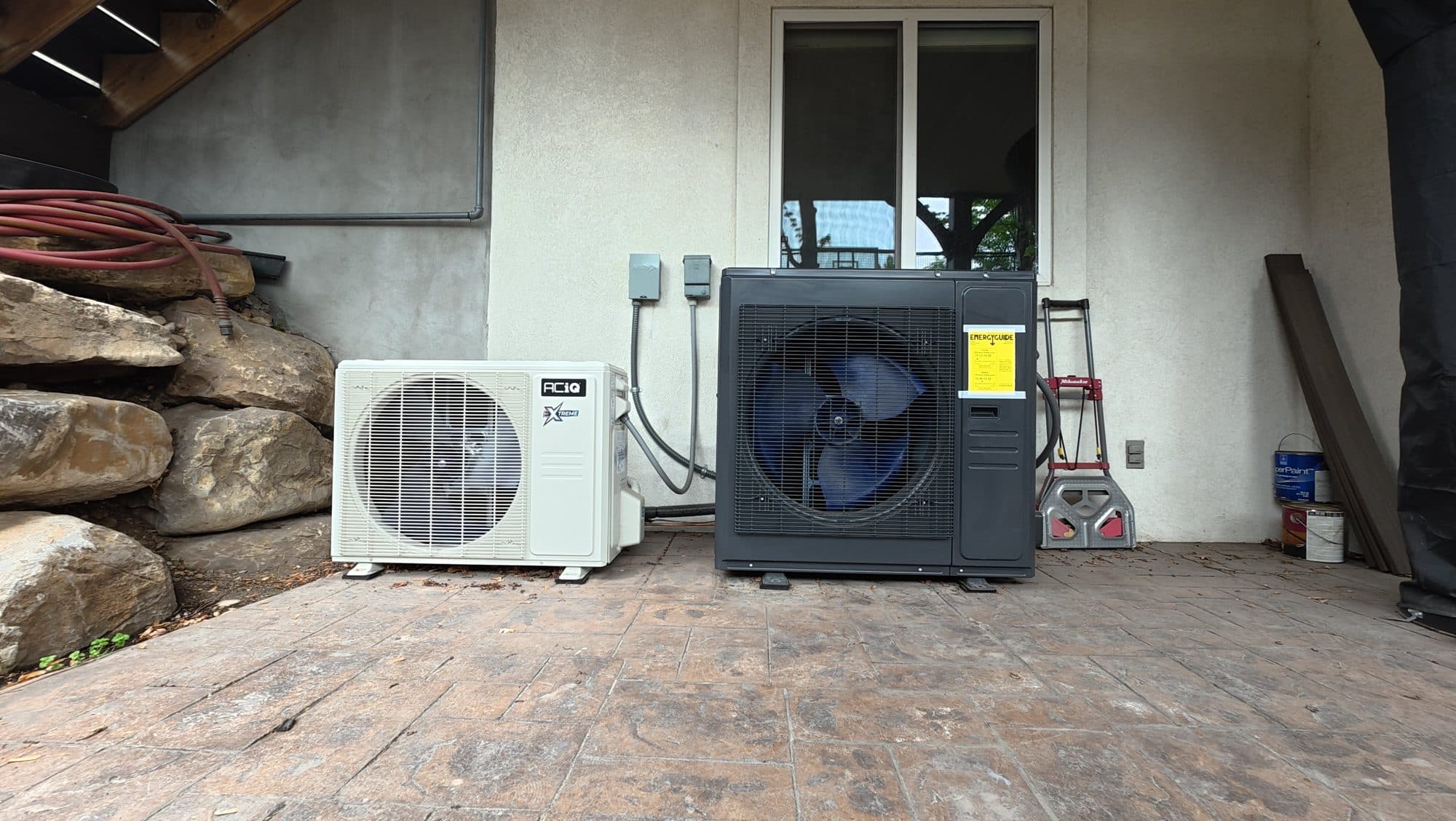
A Utah ductless mini-split is often the single best HVAC investment a homeowner can make in a finished basement, bonus room over a garage, or accessory dwelling unit. These rooms are notoriously hard to heat and cool with the central system, and a ductless mini-split solves the problem without the cost or mess of redoing ductwork. This guide walks through how they work, what they cost, and where they make sense.
Why a Utah Ductless Mini-Split Is the Right Answer for Problem Rooms
Walk into a typical Utah home built before 2010 and you'll often find the same problem in three different rooms. The finished basement that's freezing in the winter and a swamp in the summer. The bonus room over the garage that nobody can stand to be in from June through September. The ADU above the detached garage that has no realistic way to tap into the main house's HVAC. For each of these spaces, the answer is usually the same, and most homeowners haven't seriously considered it: a ductless mini-split heat pump.
What a Mini-Split Actually Is
A ductless mini-split is a small heat pump system with two main pieces. An outdoor compressor unit, often the size of a carry-on suitcase, sits against an exterior wall. An indoor head, usually mounted high on a wall, blows conditioned air directly into the room. The two are connected by a small bundle of refrigerant lines and electrical wiring that runs through a three inch hole in the wall. There are no ducts. The system both heats and cools, and modern cold-climate models work efficiently in Utah winters.
The U.S. Department of Energy overview of ductless mini-split heat pumps covers the efficiency math and confirms what we already see in basements and ADUs along the Wasatch Front.
You can install a single-zone unit (one outdoor compressor serving one indoor head) or a multi-zone unit (one outdoor compressor serving two to five indoor heads in different rooms). For most basement, ADU, and bonus room applications in Utah, a single-zone unit in the 9,000 to 18,000 BTU range does the job perfectly.
Why They Make So Much Sense for Utah's Problem Rooms
Three reasons stand out:
- They sidestep ductwork entirely. Many Utah basements were finished after the original ductwork was installed, with too few supply registers and almost no return air. Bonus rooms over garages share a wall with an unconditioned space and never get enough airflow from the central system. ADUs were never on the original duct plan in the first place. A mini-split makes all of this irrelevant.
- They're zoned by definition. Heating or cooling only the room you're actually using is dramatically cheaper than running the whole-house system to comfort one space. A mini-split lets a basement office run at 70 degrees while the upstairs sits at 64 overnight.
- They handle Utah winters now. Cold-climate mini-splits maintain rated capacity down to about 5 degrees Fahrenheit and continue operating, with reduced output, well below zero. Ten years ago this was a real concern. Today it's a solved problem for most Wasatch Front homes.
What a Mini-Split Costs in Utah
At Eco Home, ductless mini-splits start at $4,990 before rebates, and that price includes the permit, the wall mount, the line hide and the electrical. With the Wattsmart rebate, that’s as low as $4,390 for Rocky Mountain Power customers. Exact pricing depends on the home: the BTU capacity, the number of zones, the line set length, and the electrical work required all play a part. ADU and bonus-room installs tend to be straightforward. Basement installs can take more work because of the longer line set and the need to pump condensate uphill.
Mini-splits also qualify for the Rocky Mountain Power Wattsmart rebate, which runs $600 to $1,700 for a mini-split. We guarantee the rebate, show it on your final estimate, and file the paperwork for you. To qualify, you need to be a Rocky Mountain Power customer, the install has to be done by a licensed, verified contractor, and the equipment has to meet minimum efficiency and ENERGY STAR requirements. (The federal tax credit for heat pumps ended after December 31, 2025, so there is no federal credit to factor in for 2026.)
Sizing: The Most Common Mistake
Mini-splits are even less forgiving of oversizing than central systems. An oversized mini-split in a small bonus room will short cycle, fail to dehumidify, and feel uneven and uncomfortable. A 12,000 BTU head dropped into a 200 square foot bedroom will be miserable even though the math from a Phoenix-style square-foot rule says it should be fine.
For a Utah application, work with a contractor who runs a real load calculation on the specific room. Variables that matter: insulation in the walls and ceiling, window square footage and orientation, whether the floor sits over an unconditioned crawlspace or garage, and the elevation of your home. As a rough sanity check, a well-insulated 400 square foot basement room at 4,500 feet elevation usually needs a 9,000 BTU head, not a 12,000 or 18,000.
How Many BTUs You Actually Need
Use these baseline ranges as a starting point, then verify with a Manual J load calculation:
- 500 sq ft finished basement: 9,000 BTU single-zone
- 800 sq ft ADU: 12,000 to 15,000 BTU single-zone
- 1,200 sq ft basement with bonus room: 18,000 BTU dual-zone
Installation Details Utah Homeowners Should Insist On
Mini-splits look simple, but the install is full of small choices that determine whether the system runs beautifully for fifteen years or fights itself the entire time. Things to insist on:
- Proper line set sizing and length per the manufacturer's specifications, with no kinks and a clean nitrogen-purged braze on every connection.
- A real vacuum to 500 microns or below before opening the refrigerant valves. Skipping this is the single most common cause of premature compressor failure.
- Outdoor unit mounted off the ground on a wall bracket or a tall pad. Snow piling up against the unit and refreezing under the coil destroys efficiency and shortens lifespan in any Utah location that gets meaningful snowfall.
- A condensate strategy that actually works. Basement installs may need a small condensate pump. ADU installs need a frost-protected drain line if running into freezing temperatures.
- A line set cover on the exterior. Bare insulated lines stapled to the side of your house look terrible, degrade in UV, and become a chew target for rodents and birds.
The wall mount and line hide are both included in our mini-split pricing, and we pull a permit on every job.
Comfort Tuning After Install
Mini-splits are designed to run continuously at low output, not blast on and off like an oversized central system. Resist the temptation to set them aggressively low or high. Pick a temperature, leave it alone, and let the inverter compressor modulate. You'll use less power and feel more comfortable than if you treat it like a window AC.
If the indoor head is mounted high on a wall (the most common configuration), point the louvers slightly downward in cooling mode and slightly upward in heating mode. Cool air falls, warm air rises, and a few degrees of louver tilt makes a noticeable difference in how evenly the room conditions.
When a Mini-Split Isn't the Right Answer
Mini-splits are built for problem rooms, not for heating and cooling the whole house. For whole-home comfort in most Utah homes, the best setup is a dual-fuel system: a central inverter heat pump paired with a gas furnace. The heat pump handles cooling and most of the heating, and the furnace takes over on the coldest nights.
If you have aesthetic concerns about a wall-mounted head, ceiling cassettes and floor-mounted consoles exist but increase the install cost and complexity. And if your existing central system is already underperforming, the right move may be to fix the duct problems on the main system rather than bolting on a mini-split as a band-aid.
The Utah Bottom Line
For finished basements, ADUs, garages converted into living space, sunrooms, and bonus rooms over garages, ductless mini-splits are often the best HVAC investment a Utah homeowner can make. They solve comfort problems no central system can fix, they pay back in lower operating costs, and the Wattsmart rebate makes the math even more attractive. Get a load calculation, hire a contractor who can show you a portfolio of clean installs, and enjoy the room you've been avoiding for years.
Want a number for your room? Get instant pricing online or book a free estimate, and we'll show your Wattsmart rebate right on the final estimate.