
HVAC Refrigerants Are Changing: What Utah Homeowners Need to Know
June 4, 2025 · Eco Home Heating & Cooling
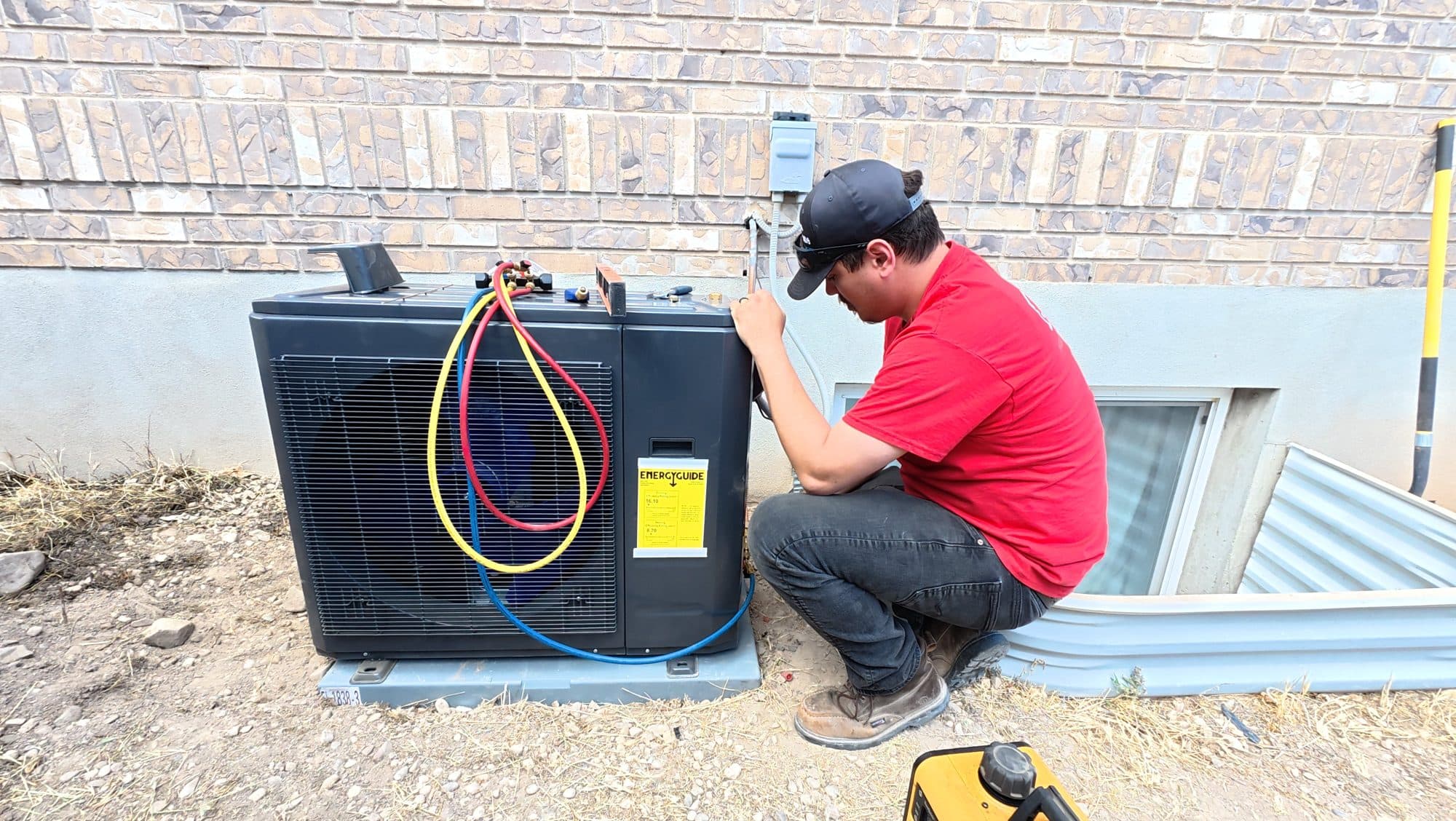
Phasing Out R-410A: What It Means for Your AC or Heat Pump in Utah Valley
The heating and cooling industry has gone through a major change driven by federal law. Under the American Innovation and Manufacturing (AIM) Act of 2020, the U.S. is phasing down hydrofluorocarbons (HFCs), including R-410A, the refrigerant used in most home air conditioners and heat pumps installed since about 2010. The goal is to reduce the climate impact of air conditioning by moving to lower-impact refrigerants.
So what does this mean for the system you have now, and for repairs and new installs? Here's where things stand in late 2026.
The Transition to Lower-Impact Refrigerants
The phasedown has been stepping down HFC production and imports on a federal schedule for several years, which has pushed R-410A prices up. Starting January 1, 2025, new residential air conditioners and heat pumps had to be manufactured for A2L refrigerants, a class with much lower global warming potential. Today, new systems use A2L refrigerants such as R-454B or R-32.
Nobody is forced to replace a working R-410A system. R-410A is still available for servicing existing equipment, but it keeps getting more expensive as supply tightens, so repairs that involve adding refrigerant cost more than they used to.
Why Is R-410A Being Phased Out?
R-410A replaced R-22, which was phased out because it depletes the ozone layer. R-410A doesn't harm the ozone layer, but it has a high global warming potential. In 2021 the EPA issued rules that set the schedule for reducing HFCs and moving the industry to alternatives like A2L refrigerants.
This isn't the HVAC industry's first adjustment to environmental regulations, and it likely won't be the last. The good news is that today's equipment is both more efficient and more environmentally responsible than what it replaces.
What Makes A2L Refrigerants Different?
A2L refrigerants have low toxicity like the refrigerants before them, with one key difference: they're classified as mildly flammable. That sounds concerning, but equipment built for A2L refrigerants is designed and tested to updated safety standards, and installation follows updated codes. That's one more reason to use a licensed contractor. We pull a permit on every job.
How to Identify the Refrigerant in Your System
The refrigerant type is usually printed on the label of the outdoor unit or listed in your owner's manual. Still not sure? Our technicians can tell you your refrigerant type and system age during a repair visit or tune-up.
Here's a quick guide:
- R-22: Used in systems installed before about 2010. No longer produced; only recovered or recycled supply remains for servicing.
- R-410A: The most common refrigerant in systems installed from about 2010 until the switch to A2L refrigerants.
- R-454B: An A2L refrigerant used in many new air conditioners and heat pumps.
- R-32: An A2L refrigerant used in many new air conditioners, heat pumps and mini-splits.
- R-134a: Rarely found in homes; mostly used in automotive air conditioning.
If Your AC Was Installed Before 2010
Your system likely uses R-22, which is no longer produced. The remaining supply is limited and expensive, so a major refrigerant leak can be costly to fix. If your system is that old, it's worth planning a replacement with a new system that uses an A2L refrigerant.
If Your AC Was Installed After 2010
Chances are it uses R-410A, so there's no urgent need to replace it. Refrigerant for servicing is still available, but it's getting more expensive, so repairs that involve a recharge will keep costing more. Regular tune-ups help catch small leaks early, and our Essential Care Plan includes two tune-ups a year and 10% off repairs. When the time comes to replace, planning ahead beats a rushed decision in a July heat wave.
How Eco Home Can Help You Make the Switch
For most Utah homes, the best replacement is a dual-fuel system: an inverter heat pump paired with a gas furnace. The heat pump handles cooling and most of your heating efficiently, and the furnace takes over on the coldest days. We install ACiQ and Amana inverter heat pumps, and complete dual-fuel systems start at $9,990 after incentives (exact pricing depends on your home).
We can help you with:
- Identifying your current refrigerant
- Replacing outdated equipment
- Installing a new dual-fuel system that uses an A2L refrigerant
- Claiming your rebates. On every heat pump install we guarantee the Rocky Mountain Power Wattsmart rebate ($1,450) and the Enbridge Gas ThermWise rebate ($700 with an 80% furnace or $1,000 with a 96%+ furnace), for $2,150 to $2,450 total, or up to $4,450 with current manufacturer dealer rebates. They're shown on your final estimate and we file the paperwork.
Ready for an Upgrade?
Moving on from R-410A or R-22 doesn't have to be a hassle. Get instant pricing or book a free estimate, and we'll help you choose the right system for your home.